JayVeeBee

MOVA Z60 Noise Levels — dB Numbers and What They Mean

Last edited by JayVeeBee on 2026-3-19 08:01

MOVA Z60 Noise Levels — dB Numbers and What They Mean.

I haven’t seen a similar post, so I hope this adds something new. I’ve been measuring the sound levels of my MOVA Z60, and I wanted to share something that helped me understand what those decibel (dB) numbers really mean in the real world.

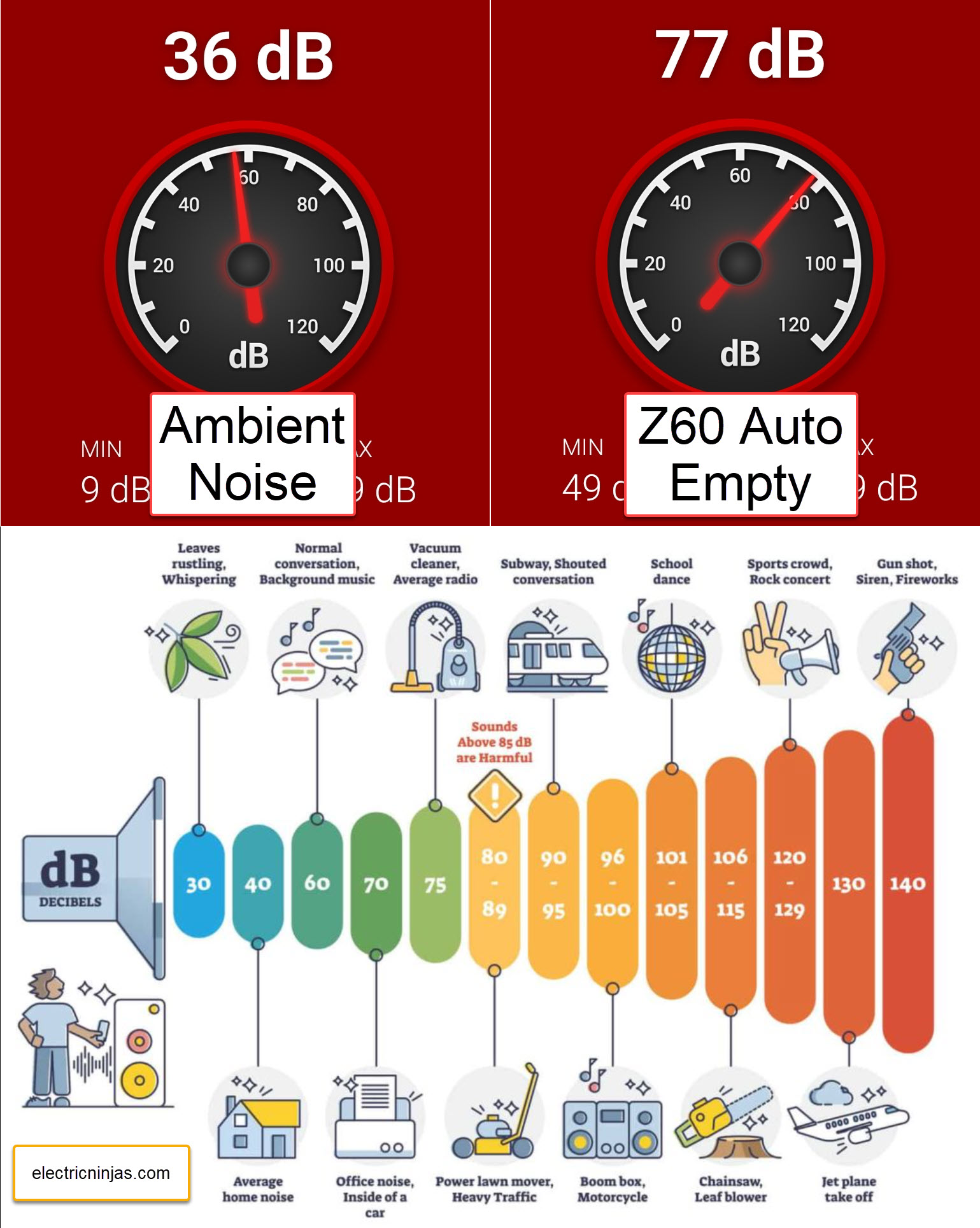
First, a quick primer: the decibel scale is logarithmic, not linear.
That means every +3 dB is roughly double the sound energy, and every +10 dB is perceived as about twice as loud to human ears.  So going from 40 dB to 70 dB isn’t “a bit louder” — it’s orders of magnitude louder.

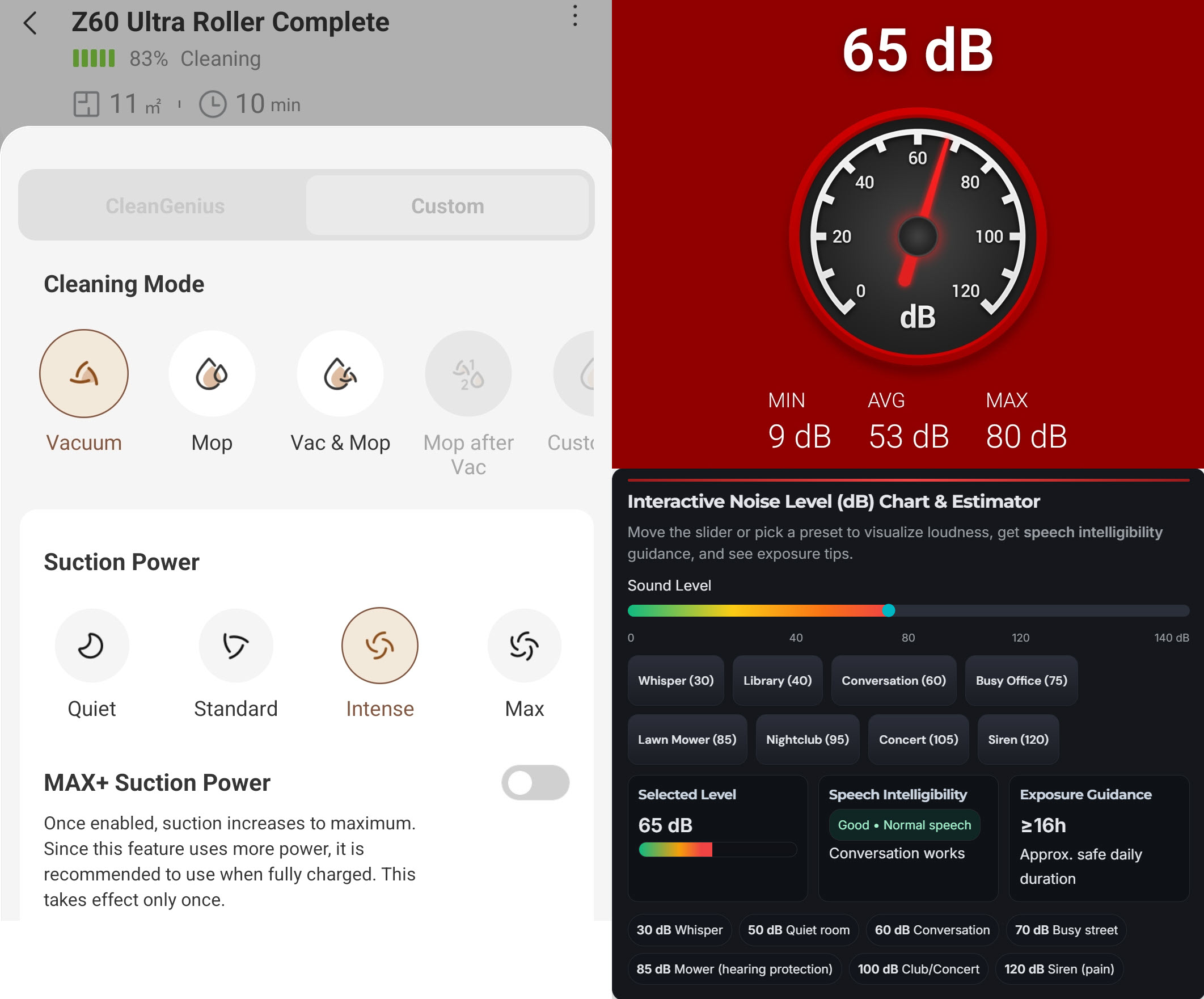
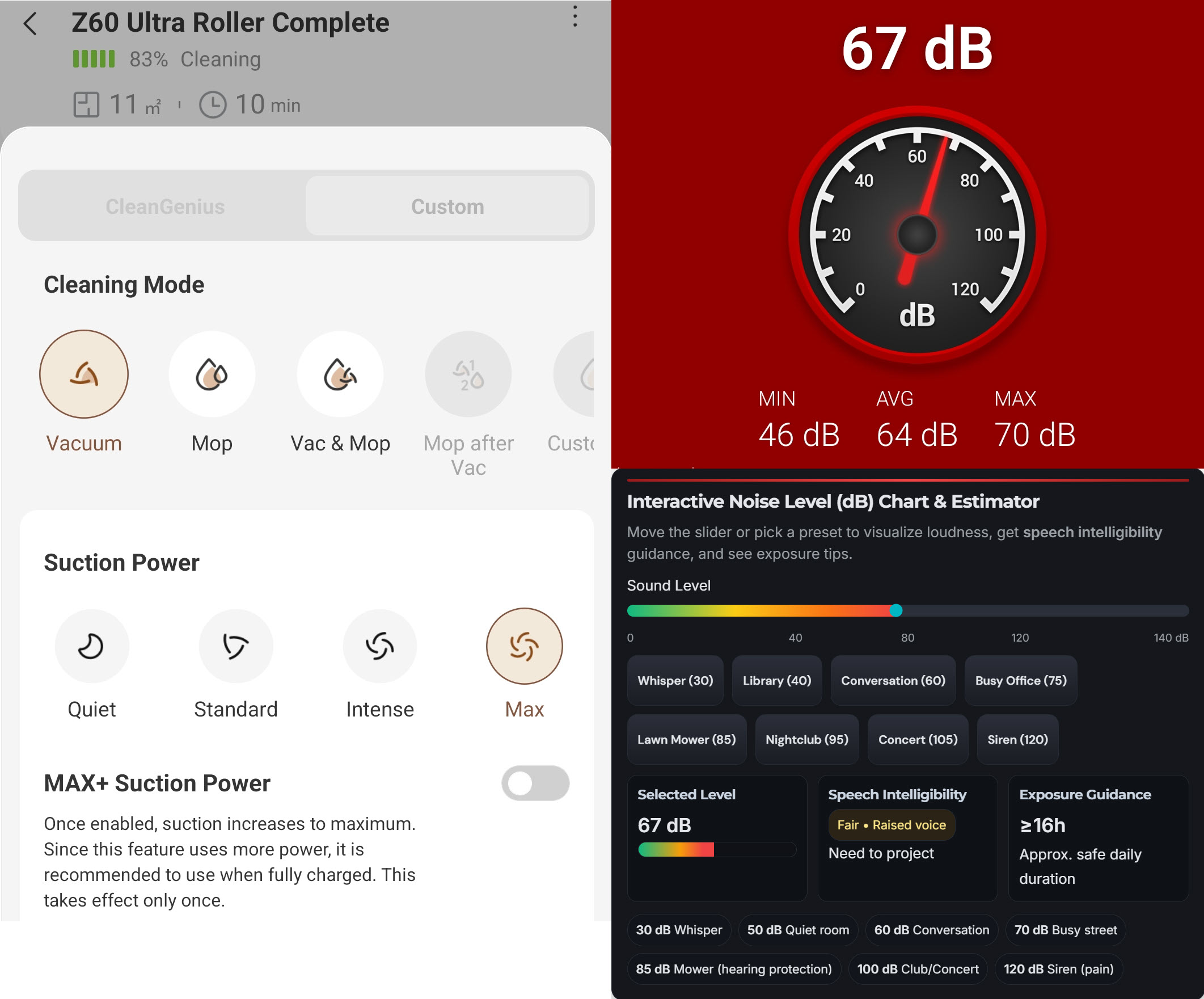
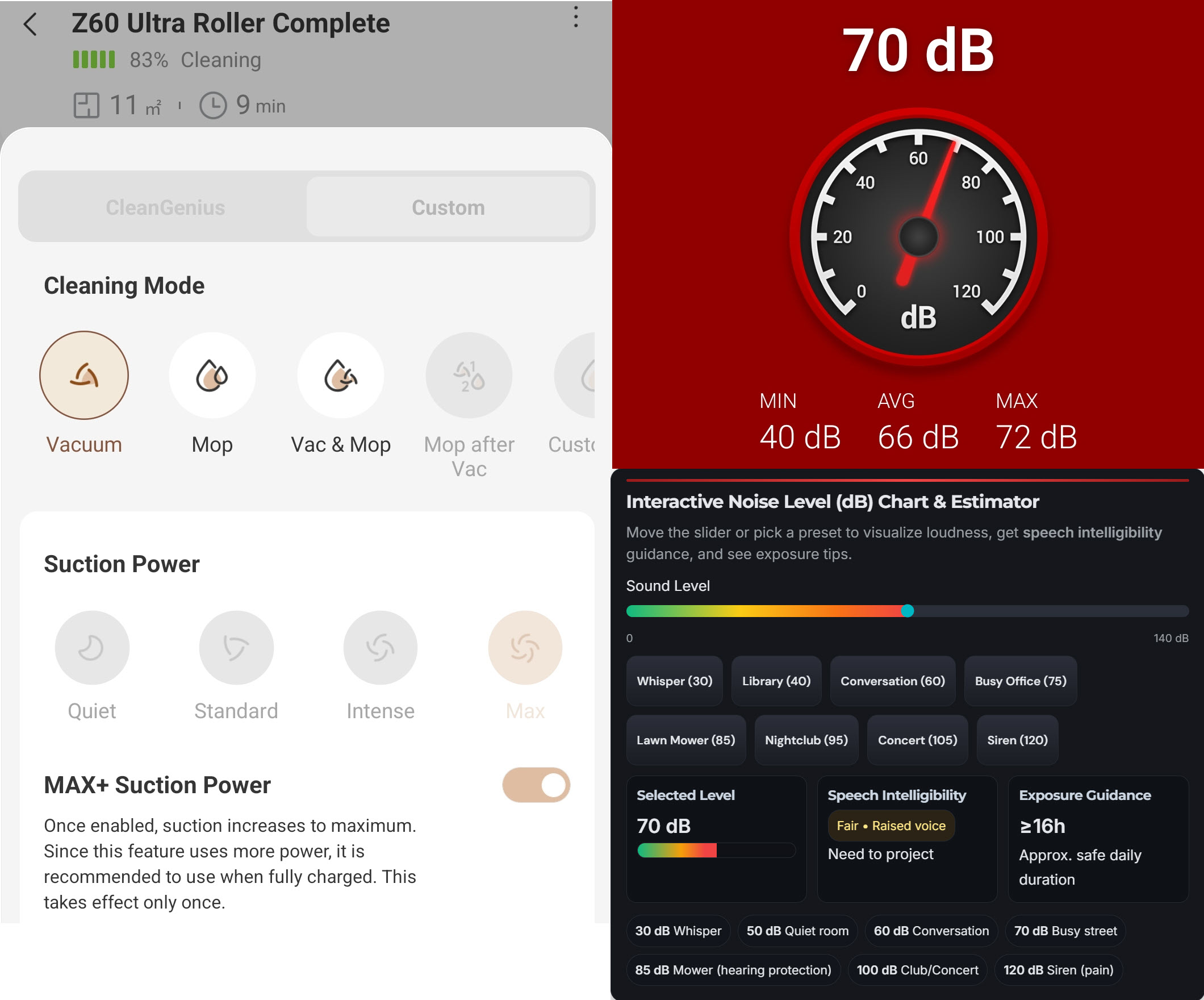
Using a basic cell‑phone sound meter app and measuring from 1 meter away from sound source, I measured the extremes: Ambient room noise ~36 dB to Z60 Auto‑Empty ~77 dB

A 41 dB jump translates to about 4× louder to human perception.

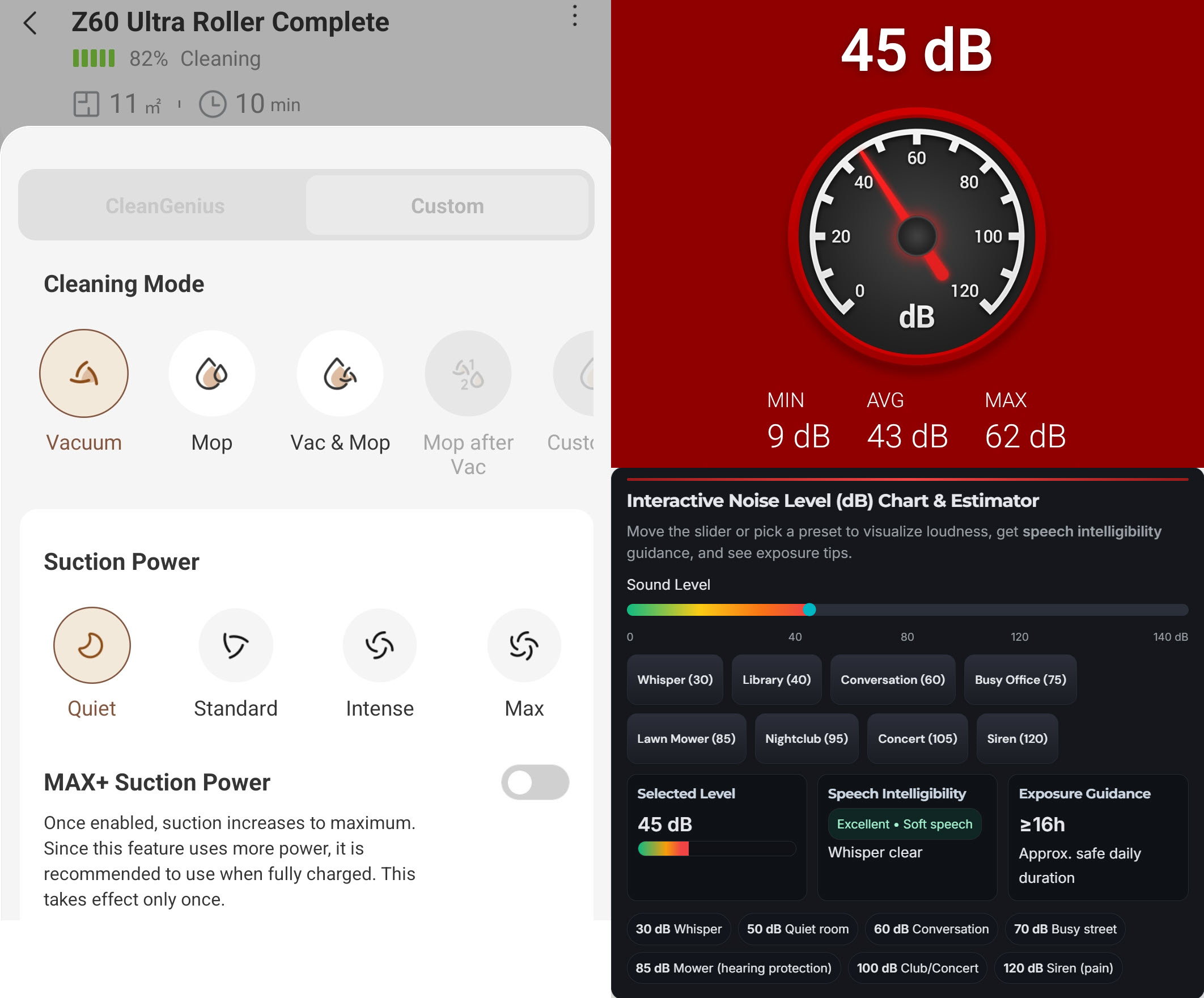
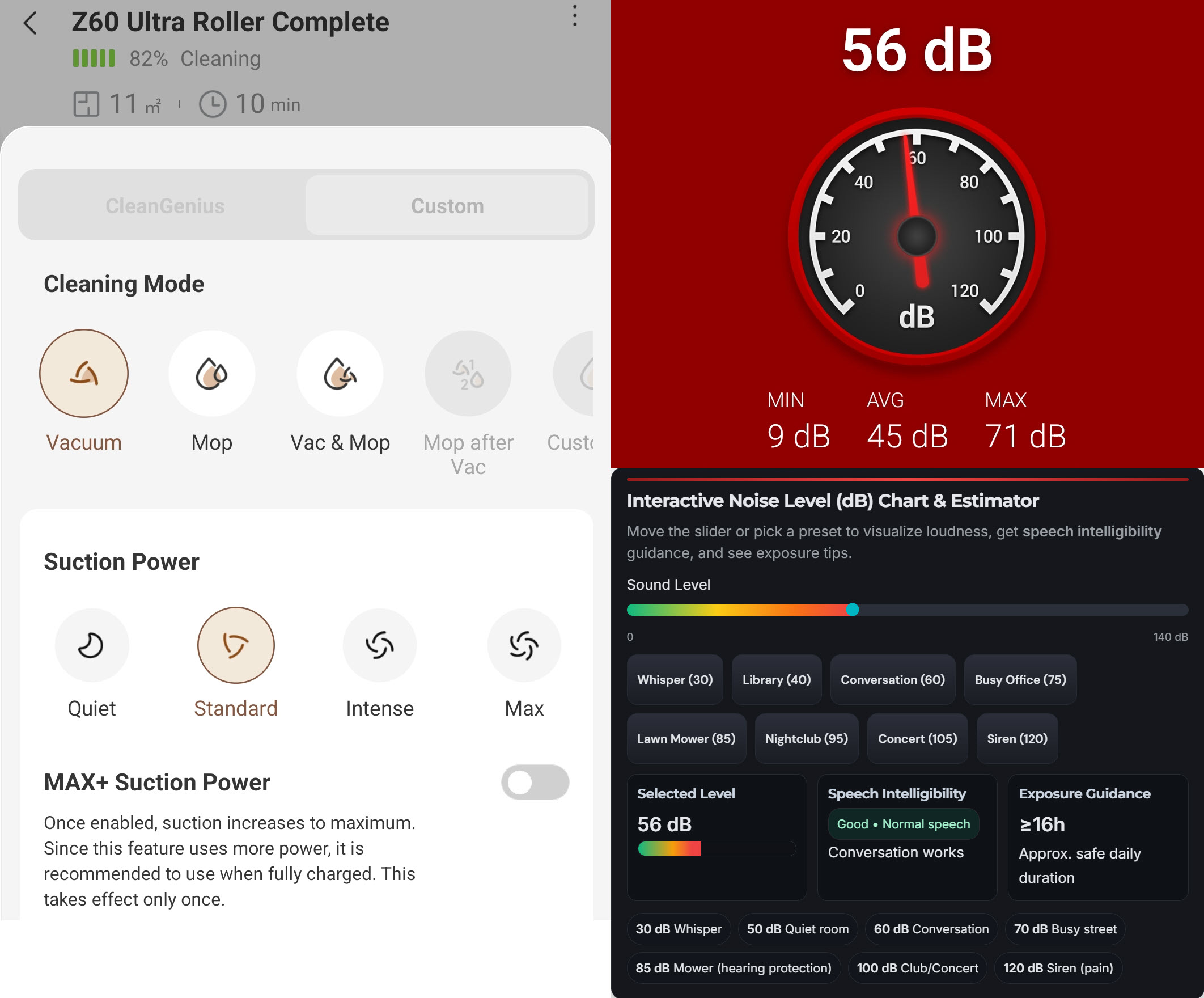
The Z60 has five vacuum modes.  I was excited to find that you can change them on the fly during a cleaning cycle: Quiet, Standard, Intensive, Max, and Max+. Each step increases both suction and noise. If the robot enters a room where noise matters (sleeping kids, meetings, pets), you can instantly drop it to Quiet. When it hits a high‑traffic area, bump it to Max.

Sure, I didn’t use calibrated instrumentation, but I still find the relative data useful. If you’re sensitive to noise or have pets/kids, knowing when and why these spikes happen makes the Z60 feel a lot more predictable.

Disclaimer: Interactive dB charts from boomspeaker.com.  I received this Z60 as part of the MOVA Z60 Get & Create Event. #GetYourZ60

No comments yet,

Grab the first review

You need to log in to reply. Login | Register
UID:VO167355 US
  • 20Posts
  • 1Friends
Privacy Policy|Terms of Use|Archiver|Mobile|DarkRoom|Software License and Service Agreement

© 2026 MOVA Forum All Rights Reserved | Support by Discuz! X5.0 Font by MiSans

Quick Reply Back to Top Return to List